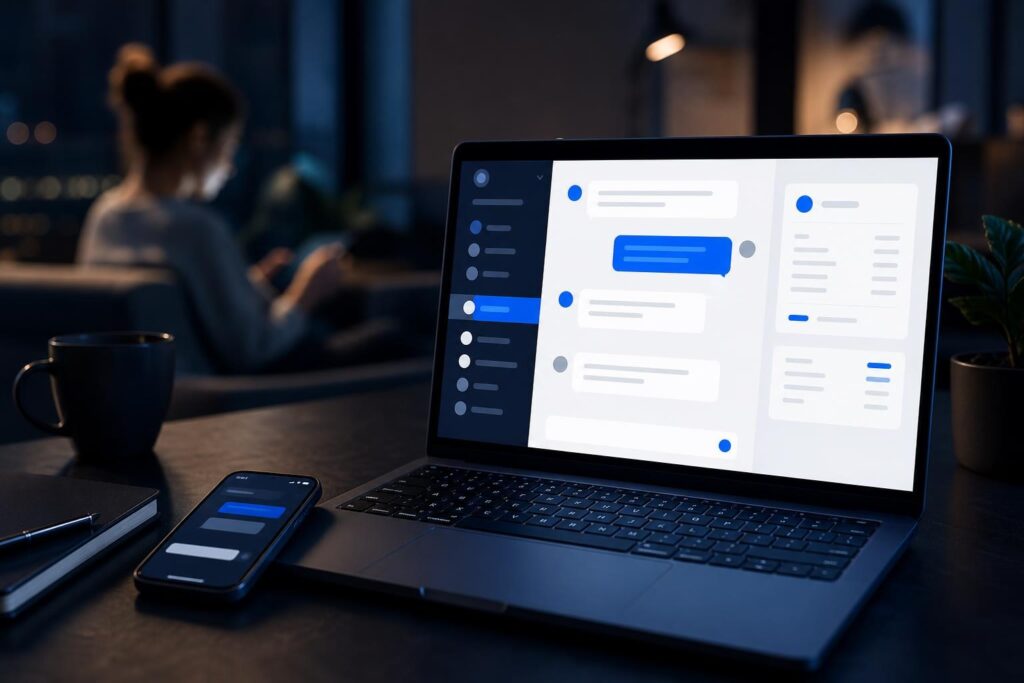
A potential customer visits your website at 9:30 p.m. They want to know whether you serve their area, what a typical project involves and how to request an appointment. Your team is unavailable, and a generic contact form asks them to submit a message without answering anything.
By morning, that visitor may have contacted another business that made the next step clearer.
An AI customer service bot can reduce this after-hours gap without pretending that software should replace your staff. Its role is narrower and more practical: answer approved questions, collect relevant lead information and help visitors understand what to do next. Your team remains responsible for judgment, sensitive situations and the human relationship that turns an inquiry into a customer.
Why after-hours leads are easy to lose
Website visitors do not always arrive during office hours. They research contractors after work, compare professional services over the weekend and explore business purchases when their schedules allow.
The problem is not simply that nobody is online. It is that many websites create a dead end when the team is unavailable. A phone number goes to voicemail. An inbox sends an automatic receipt. A contact form collects a name and email but leaves the visitor’s immediate questions unresolved.
Those options still have value, but they place most of the effort on the prospect. The visitor must explain everything, wait for a response and remember why they contacted you in the first place.
A useful after-hours bot changes the interaction from “leave a message” to “let’s clarify what you need.” It should not promise an outcome or make decisions beyond its training. It should help the visitor make progress.
What an after-hours lead-capture conversation should accomplish
The strongest bot conversations are focused. They do not recreate an entire sales consultation or force every visitor through a long questionnaire.
For most service businesses, an effective initial conversation should cover four jobs:
- Identify intent. Determine whether the visitor wants a service, has a support question, needs pricing context or is trying to book.
- Answer common questions. Provide approved information about services, pricing, policies, service areas, availability expectations or booking steps.
- Capture useful details. Ask for the contact information and project context your team needs to continue the conversation.
- Set expectations. Explain what the visitor should expect next without promising a response time or result the business cannot consistently deliver.
This creates a better starting point for both sides. The prospect gets immediate guidance, while the team receives more context than it would from a blank “How can we help?” form.
Elite UI develops AI customer-service and lead-capture bots trained on a business’s services, pricing, FAQs, policies and booking steps. That business-specific knowledge is what makes the conversation useful rather than generic.
The bot needs approved business knowledge, not unlimited freedom
An AI bot is only as commercially useful as the information and boundaries behind it. Before discussing the conversation style, decide what the bot is allowed to say.
A practical knowledge brief can include:
- Services offered and services not offered
- Locations or customer types served
- Approved pricing information or how estimates are determined
- Frequently asked questions and concise answers
- Cancellation, refund, scheduling and other relevant policies
- Information required before a quote or consultation
- Booking steps and realistic follow-up expectations
- Topics that always require a team member
Be especially careful with pricing. If your work requires a custom estimate, the bot should explain the factors involved and collect the details needed for review. It should not invent a quote simply because a visitor asks for one.
The same principle applies to complaints, unusual requests and high-stakes advice. A bot can acknowledge the issue and gather context, but your team should handle situations requiring discretion, negotiation or professional judgment.
How the bot supports your team instead of replacing it
“Will this make our customer experience feel less human?” is a reasonable concern. It can if the bot is positioned as a complete substitute for people. That is not the most useful model for a small business.
Think of the bot as the first-response layer for repeatable website conversations. It handles the questions your team answers frequently and helps organize initial inquiries. People take over where empathy, expertise and accountability matter most.
Good work for the bot
Explaining service categories, answering approved FAQs, clarifying basic requirements, collecting project details and outlining booking steps are structured tasks that can work well in an automated conversation.
Good work for your team
Recommending a complex solution, resolving a complaint, negotiating scope, approving exceptions and building a client relationship still benefit from direct human involvement.
This division of work can also improve consistency. Instead of asking employees to repeatedly type policy or service information from memory, the bot can present the approved version while the team concentrates on higher-value conversations.
What this looks like for different businesses
A local home-service company could ask what type of work is needed, where the property is located and whether the request is routine or urgent. It can explain the normal booking process while avoiding a diagnosis or firm quote.
A professional-services firm could clarify the visitor’s business type, the problem they need help with and their desired timeline. The bot can answer general questions about the firm’s services, while leaving recommendations and engagement decisions to a professional.
A real estate business could distinguish between buying, selling and general property questions, then collect location preferences and contact details. A creator or agency could identify the requested service, expected deliverables and project stage before the team reviews fit.
In each case, the objective is not to make the visitor finish a lengthy intake process. It is to collect enough context to make the next human response more relevant.
Common objections to consider before adding a bot
What if it gives the wrong answer?
This risk should shape the implementation. Use approved source information, define subjects the bot should not resolve and avoid training it on outdated or contradictory material. Review services, prices, policies and booking instructions whenever the business changes them.
The bot should also be clear when a request needs team review. A confident-sounding answer is not helpful if the underlying information is uncertain.
Will visitors find it impersonal?
Visitors are more likely to be frustrated by a conversation that is vague, repetitive or difficult to exit than by automation itself. Keep the language direct, ask only necessary questions and make it clear when a person will need to continue the discussion.
Your website also affects how the interaction feels. Clear service pages give visitors context before they open a conversation. If the surrounding site is confusing or incomplete, consider improving it with an AI Website Builder rather than expecting a bot to compensate for every content problem.
Will setup create more work for the team?
Some preparation is necessary. The business must organize its FAQs, policies, service details and lead-qualification questions. That effort is valuable even beyond the bot because it exposes inconsistent answers and missing website information.
Start with the highest-volume questions rather than trying to document every possible scenario. The first version should solve a defined communication gap, not attempt to automate the whole customer journey.
Is an AI customer service bot a fit for your business?
A trained bot is worth considering if several of these conditions apply:
- Website inquiries regularly arrive outside staffed hours.
- Your team repeatedly answers the same service, pricing or policy questions.
- Contact forms produce leads with too little context for a useful follow-up.
- Prospects need basic guidance before they are ready to book or speak with someone.
- Your business has clear service information and defined boundaries for human review.
It may be premature if your services are undocumented, your policies change constantly or nearly every inquiry requires immediate expert judgment. In that situation, organize the business knowledge first. A bot should communicate a clear operating process, not hide the absence of one.
Build the first conversation around one missed opportunity
Do not begin with “What can we automate?” Begin with a more useful question: “What does an after-hours visitor need before they can take the next step?”
Choose one common journey, such as requesting an estimate, checking service-area fit or preparing to book. Document the approved answers, decide which details the team needs and identify where a person must step in. That gives the bot a focused job and gives your team a practical way to evaluate the experience.
If slow after-hours replies are costing your business promising conversations, Elite UI can help you discuss a trained customer-service and lead-capture experience built around your real services, policies and booking process. Request an AI Bot.
Ready to Turn This Into a Faster Workflow?
Try AI Customer Service Bot inside Elite UI and move from research into a real business-ready result.
Product features, pricing, plan details and availability may change. Check the current Elite UI product page for the latest information before purchasing or publishing.