A potential customer opens your website chat with a simple question: “Can you help with this?” Instead of answering, the bot immediately requests a name, email address, phone number, company name, budget, timeline and detailed project description.
That may collect plenty of data, but it is not a good conversation. The customer has not received enough value to justify the effort.
The better approach is to collect the minimum information needed for the next useful action. That might mean recommending the right service, confirming basic fit, preparing a follow-up or explaining what the customer should do next.
Here is how to decide which questions belong in an AI lead-capture conversation—and which ones should wait.
Start With the Decision the Conversation Needs to Support
Every field should help the bot or your team make a specific decision. If you cannot explain how an answer changes the next step, you probably do not need to ask for it yet.
For example, a local contractor may need a service type and ZIP code to determine whether an inquiry is relevant. A creative agency may need a project category and approximate timeline. A real estate business may need to know whether someone is buying, selling or renting before asking about property preferences.
Work backward from the next action:
- Define the desired outcome. Should the conversation answer a question, identify the right service, qualify an inquiry or prepare the lead for human follow-up?
- Identify the minimum decision criteria. Determine which facts materially affect eligibility, urgency or service fit.
- Separate essential questions from useful context. Ask essential questions first and save supporting details for later.
- Choose the contact point. Request personal details only after the customer understands why a follow-up would be useful.
This turns lead capture from a generic data-collection exercise into a customer-centered workflow.
Use Three Levels of Lead Information
A practical way to control conversation length is to divide possible questions into three levels: essential, qualifying and follow-up.
1. Essential details
These are the smallest set of answers required to understand the request. They usually include the customer’s primary need and one or two details that affect your ability to help.
A home-service business might ask what type of service is needed and where the property is located. A business consultant might ask what outcome the prospect is trying to achieve. An ecommerce company might begin with the order or product issue rather than requesting a complete customer profile.
The customer should be able to answer these questions quickly, without searching for documents or writing a long explanation.
2. Qualifying details
These questions help determine fit, priority or the appropriate next step. Common categories include timeline, project stage, service location, approximate scope and relevant preferences.
Not every business needs to ask about budget. If pricing is standardized or the customer can review published options, a budget question may add friction without improving the decision. If project scope varies significantly, a broad budget range may help—but it should come after the bot has established context.
3. Follow-up details
These are useful to your team but not necessary for the opening exchange. Examples might include a secondary contact method, background information, technical requirements or detailed preferences.
Collect these after the lead has indicated interest in continuing. Some information may be better gathered by a person during a consultation rather than through chat.
Design the Conversation Around Value Exchanges
A strong lead-capture flow alternates between asking and helping. The customer provides a detail; the bot uses that detail to offer a more relevant response or next step.
Consider the difference between these two sequences:
“Enter your name, email, phone number, service needed, budget and timeline.”
And:
“What are you looking for help with?” followed by “Based on that request, I need two quick details to point you toward the right next step.”
The second sequence creates a reason for the questions. It also gives the customer a sense of progress.
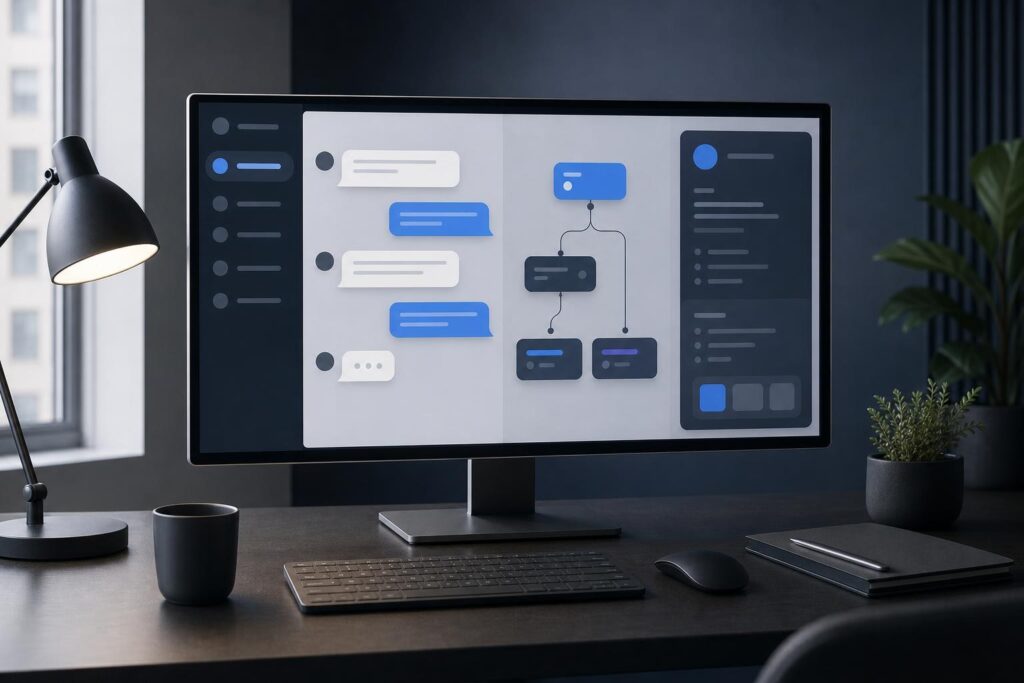
An AI customer-service and lead-capture bot from Elite UI can be trained around a business’s services, pricing, FAQs, policies and booking steps. The goal is not simply to put a chat box on a website. It is to shape a conversation around the questions customers actually ask and the information your team genuinely needs.
What to Ask—and When to Ask It
The right fields vary by business, but the sequence should usually move from low-effort context to higher-commitment details.
- Need or intent: Ask what the customer wants to accomplish or resolve.
- Service fit: Gather the one or two details that determine whether your business can help.
- Timing: Ask when the customer needs the service, especially when urgency affects the next step.
- Contact information: Request a name and suitable follow-up method once there is a clear reason to continue.
- Additional context: Invite optional details that could help your team prepare, rather than forcing a lengthy response.
Avoid asking the same question in multiple ways. If the customer has already explained the project in natural language, the conversation should not make them repeat every point in separate fields.
It is also wise to avoid collecting sensitive information through a general lead conversation. Ask only for what your business needs, explain why contact details are being requested and align the flow with your own privacy and data-handling policies.
Match the Questions to the Business Model
A universal lead script rarely works because different businesses make different qualification decisions.
Local services: Start with the requested service, location and urgency. Detailed property information can often wait until the basic service area and job type are clear.
Professional services: Ask about the business problem, desired outcome and timeline. Avoid turning the initial conversation into a full discovery questionnaire.
Agencies and creators: Identify the type of deliverable, current project stage and target date. Request brand files, specifications or extensive creative direction later.
Real estate: Clarify intent first—buying, selling, renting or requesting property information—then ask only the questions relevant to that path.
Startups and software businesses: Separate support questions from sales inquiries. A prospective buyer and an existing customer should not be pushed through the same qualification sequence.
The website around the conversation matters too. Clear service pages give the bot and visitor a shared context. If the underlying customer journey is still unclear, an AI Website Builder can help create a more focused, mobile-ready business presence before additional lead-capture steps are layered on top.
Plan for Uncertainty and Human Follow-Up
An AI bot should not be expected to replace business judgment or handle every unusual situation. Its most useful role is often answering repeat questions, collecting initial context and helping visitors reach an appropriate next step.
Define the boundaries before launch. Decide which questions the bot can address from your approved business information, which topics require clarification and which situations should move to a person.
This is especially important for complaints, unusual pricing requests, policy exceptions and complex projects. A graceful acknowledgment of uncertainty is better than an overconfident response.
Common Objections Before Adding a Lead-Capture Bot
Will customers abandon the conversation?
They may if the bot behaves like a long form disguised as chat. Keep the opening questions easy, explain why information is needed and avoid making every field mandatory. The conversation should deliver useful guidance before requesting significant effort.
Will it make the business feel less personal?
Not if its role is clearly defined. A bot can handle repetitive opening questions and gather context while leaving nuanced advice and relationship-building to your team. It should support a personal experience, not pretend that every conversation requires no human involvement.
What if the bot gives an incorrect or incomplete answer?
Limit its scope to current, approved information about your services, pricing, FAQs, policies and booking process. Review that source material regularly and establish a clear path for questions that need human judgment. A bot cannot compensate for outdated or contradictory business information.
Is an AI Lead-Capture Bot a Fit for Your Business?
A trained bot is worth considering when slow replies are causing inquiries to sit unanswered, your team repeatedly handles the same early-stage questions or visitors need help choosing between services.
It is particularly relevant if you can clearly document what you offer, who each service is for, the questions customers ask and the steps that follow a qualified inquiry.
You may need to fix the underlying workflow first if your services are undefined, pricing information changes without documentation or team members disagree about how leads should be handled. The quality of the conversation depends on the quality of the business information behind it.
Before moving forward, review recent inquiries and identify the five questions prospects ask most often. Then list the smallest set of details your team needs to respond intelligently. That becomes the foundation of a focused bot conversation—not a copy of your longest intake form.
Build a Shorter Path to a Useful Reply
The best lead-capture conversation does not collect everything. It collects the right information in the right order, gives the customer a reason to continue and prepares your team for a more relevant follow-up.
If your business is losing opportunities to delayed or inconsistent replies, Request an AI Bot to discuss a conversation trained around your services, pricing, FAQs, policies and booking steps.
Ready to Turn This Into a Faster Workflow?
Try AI Customer Service Bot inside Elite UI and move from research into a real business-ready result.
Product features, pricing, plan details and availability may change. Check the current Elite UI product page for the latest information before purchasing or publishing.